Our Mission is to democratize access to geospatial education by providing workshops, outreach programs, and online learning opportunities to students in environmental and science-related fields across Nigeria. What We Do Partner with universities, colleges, and polytechnics to introduce GIS to students through on-campus workshops and seminars Offer introductory training on GIS software like QGIS and ArcGIS Promote the application of GIS in environmental research, climate change, urban planning, and other real-world challenges. Together, we can put spatial literacy into the hands of the next generation of Nigerian changemakers.
Recognized for advancing GIS education and innovation at GEOSON’s Annual General Assembly, Conference, and GIS Day 2022
The Afro Spatial Initiative (ASI), founded and directed by Benjamin Odoh, has been recognized by the Geoinformation Society of Nigeria (GEOSON) at the Annual General Assembly/Conference and GIS Day 2022 for its outstanding contributions to advancing geospatial education and innovation in Nigeria.
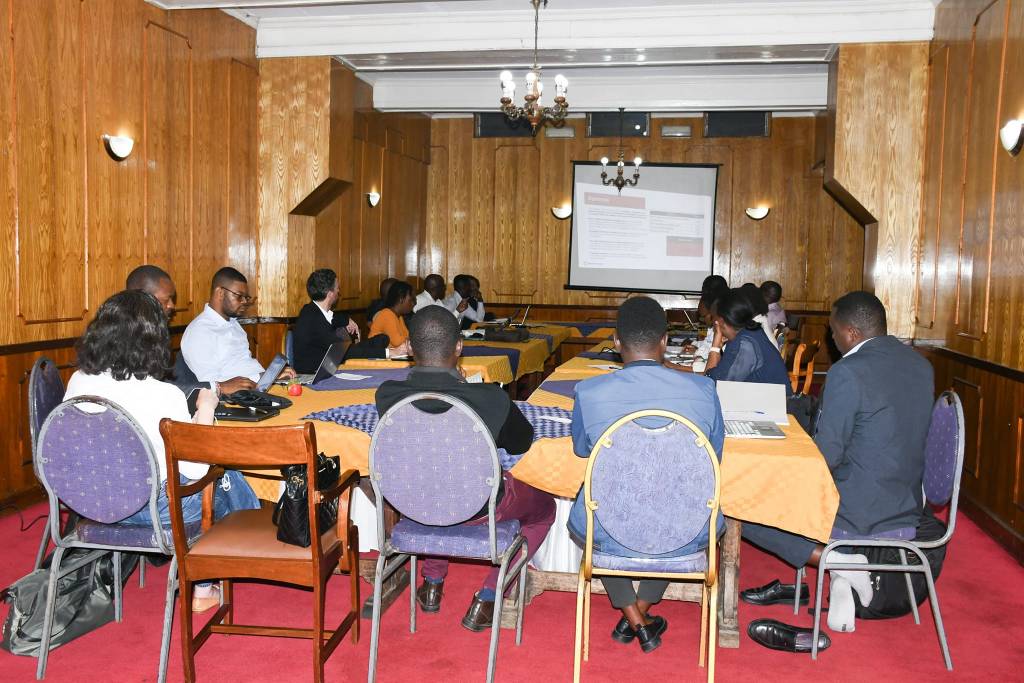
This award celebrates ASI’s mission to bridge the gap in Geographic Information Systems (GIS) education, particularly in universities across Northern Nigeria where access to such training remains limited. Since its inception, ASI has delivered impactful workshops, practical trainings, and outreach programs in several tertiary institution, the University of Jos, Plateau State University Bokkos, Karl-Kumm University Vom, Nasarawa State University, Keffi, and Anan University Kwall, introducing hundreds of students to the transformative applications of GIS in environmental management, public health, and sustainable development.
The recognition from GEOSON affirms the dedication of the ASI team, our partners, and the students who continue to drive this movement forward. It is a milestone that strengthens our resolve to expand our reach, foster collaborations, and empower the next generation of geospatial professionals.
Together, we will continue to put Nigeria on the global GIS map, one empowered learner at a time.
Project Title: Afro Spatial Initiative: Promoting GIS Literacy and Environmental Awareness in North Central Nigeria
Founder & Project Lead: Benjamin Chinedu Odoh
Initiated: 2019
Project Overview
The Afro Spatial Initiative (ASI) is a nonprofit geospatial education outreach program founded by Benjamin Chinedu Odoh, aimed at addressing the critical lack of Geographic Information Systems (GIS) education in northern Nigerian tertiary institutions. The initiative is grounded in the belief that geospatial technology and environmental data literacy are powerful tools to empower the next generation of African scientists, policymakers, and environmental professionals.
Through a series of on-campus workshops, hands-on GIS training sessions, and institutional collaborations, ASI delivers targeted educational support to universities in regions where GIS is either poorly integrated or completely absent from the academic curriculum.
Objectives of the Initiative
To bridge the digital and educational divide in geospatial technologies across underserved Nigerian universities.
To expose students and faculty to real-world GIS applications in environmental monitoring, disaster risk reduction, land management, and public health.
To inspire innovation and STEM participation through spatial science tools and open-source data platforms.
To build long-term academic capacity by introducing sustainable GIS programs and mentorship networks.
Scope and Reach
As of July 23, 2022, ASI has successfully implemented GIS training and environmental education outreach in the following institutions in Plateau State:
University of Jos
Plateau State University, Bokkos
Karl-Kumm University, Vom
Anan University, Kwall
Plateau State Polytechnic
Federal College of Education, Vom,
Nasarawa State University Keffi
Federal University Lafia
Each program reached an average of 30 to 50 students and academic staff members. Over 200 students have directly benefited from the initiative’s workshops, with dozens more engaged through mentorship and post-training support.
Originality and Significance
Afro Spatial Initiative is one of the first grassroots-led geospatial outreach programs tailored for northern Nigerian academic institutions. While GIS is widely used globally, access and awareness remain extremely limited in many Nigerian universities, particularly outside major cities.
What makes ASI an original and nationally significant contribution is its:
Localized curriculum developed in response to institutional needs.
Field-based demonstrations and open-source GIS tools to reduce learning barriers.
Policy-aligned framework supporting Nigeria’s Sustainable Development Goals (SDGs), especially in climate action, education, and environmental protection.
Scalable model for replication across other West African states.
Impact Report (2019–2022)
Metric
Achieved
Universities Engaged
8
Total Students Trained
200+
Academic Staff Reached
13+
GIS Projects Initiated by Students
15+
Post-Training Collaborations
6
Female Participation
34%
Success Stories:
Several students who attended the ASI training have initiated environmental mapping projects within their departments.
One university has since incorporated introductory GIS courses into its geography and environmental studies curriculum.
Local faculty have begun forming GIS research clusters, with continued support from Benjamin Odoh and his team.
Conclusion
The Afro Spatial Initiative represents a pioneering, self-driven effort to expand access to spatial technology and environmental education across underserved regions in Nigeria. Mr. Benjamin Odoh’s vision, implementation, and mentorship have had a transformative effect on student capacity, institutional innovation, and environmental resilience in Plateau State and set the stage for broader continental impact.
Harnessing the Power of Location Intelligence for Healthier Communities
What is GIS and Why Does it Matter?
Geographic Information Systems (GIS) are more than just maps; they’re analytical tools that integrate spatial data with health and environmental indicators. This combination helps experts visualize patterns, detect risks, and make informed decisions that safeguard communities.
GIS in Environmental Health
GIS enables:
Mapping pollution sources and their spread.
Monitoring air, water, and soil quality.
Assessing environmental hazards near homes, schools, and workplaces.
Supporting climate change impact studies.
This spatial perspective ensures environmental risks are identified early and addressed effectively.
GIS in Public Health
In public health, GIS plays a key role in:
Tracking disease outbreaks in real-time.
Mapping access to healthcare facilities.
Identifying underserved areas for new clinics or vaccination sites.
Linking environmental exposures to health outcomes like respiratory illnesses.
By connecting environmental and health datasets, GIS reveals patterns that guide targeted interventions.
The Opportunity for Africa
For Nigeria and other developing regions, GIS bridges gaps in data availability and technical capacity. Through the Afro Spatial Initiative (ASI), we train students and professionals to use spatial analysis in solving pressing environmental and health challenges.
Join the Movement
The future of environmental and public health lies in data-driven action. By merging geospatial technology with local knowledge, we can create safer, healthier, and more sustainable societies.
Get involved with ASI today, where maps meet impact.
We’re excited to launch Afro Spatial Initiative, a platform created to introduce Nigerian university students, especially those in northern institutions, to the world of GIS and geospatial applications.
Our mission is simple: close the gap in GIS education and empower students in environmental and science-related fields with skills that matter.
Follow us for:
GIS training updates
Free learning resources
Real-world applications of geospatial tech in Nigeria
Let’s build a spatially aware generation; one student at a time.



 Afro Spatial Initiative (ASI)